E-commerce, short for ‘electronic commerce,’ entails the trading in products or services using computer networks such as the Internet.
E-commerce draws on technologies such as mobile commerce, electronic funds transfer, supply chain management, Internet marketing, online transaction processing, electronic data interchange (EDI), inventory management systems, and automated data collection systems.
Below you’ll find a bunch of our posts related to e-commerce. Some of the topics that our company bloggers cover include magento e-commerce, and the best ecommerce sites that are currently active on the web. Because e-commerce is a wide and expansive field that is constantly growing, our team is constantly on the go to cover all the latest and greatest news associated with e-commerce.
Since Hara Partners is an e-commerce solutions company, all of the e-commerce going-ons in the world are of the most maximal concern to us. Some of the topics that we covered in the past include Asian e-commerce, mobile e-commerce platforms, and e-commerce trends.
For your information, we’ve also listed some of the common types of e-commerce platforms below:
On Premise E-commerce:
On-premise E-commerce software usually requires initial one time purchase investment in terms of licensing fees. Also, it implies extra costs related to hardware and installation services as well as data migration and on-going maintenance fees that are usually charged on a yearly basis for software updates and support. Some examples of typical on premise E-commerce platforms are Hybris, Sanna Commerce, Oorjit, and IBM WebSphere.
Software as a service (SaaS) E-commerce:
Software as a Service (SaaS)- is a cloud based delivery model in which applications are hosted and managed in a service provider’s datacenter, paid for on a subscription basis and accessed via a browser over an internet connection. Two examples of typical SaaS E-commerce solutions are Shopify and Demandware.
Open Source E-commerce:
Open source e-Commerce is a free of charge platform that doesn’t imply licenses fee. Furthermore, open source users are also responsible for installing, maintaining, securing and configuring the software on their own servers. In order to set up an open source platform, basic technical expertise is required in the areas of web design and development. Software products that are distributed as open source are generally free, and users can access and modify the source code. Three examples of typical open source E-commerce platforms are PrestaShop, osCommerce, Magento and Thelia.
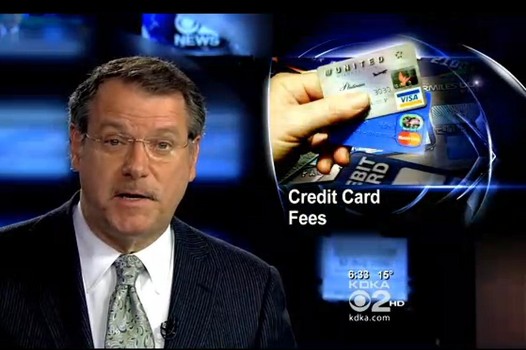
A host of major retailers, including Wal-Mart and Target, joined the National Retail Federation in arguing against the settlement’s repercussions, claiming that it burdens them with an impossible choice: either retailers swallow substantially higher costs for swipe fees, or they take the risk of passing the credit card fee on to customers. The deal is still evolving, but it’s hard to say at this point whether the final terms will improve the situation. Logistically, implementing register changes and extensive paperwork may not prove worthwhile to many merchants. Ultimately, consumers’ purchasing power and merchants’ bottom line will be the deciding factors for the surcharge question.
Hardest hit will be smaller or low-margin businesses without the clout to negotiate lower rates from the credit card issuers. And consumer advocates claim that allowing the credit card fee would set a dangerous precedent, one that was mercifully avoided when consumer ire forced banks to roll back debit card fees over the past few years.
Not everyone needs to worry; ten states (among them New York, California, and Texas) have made the new fee illegal, and cash and debit purchases will remain unaffected. There are also laws requiring retailers to maintain the same card acceptance policies in all stores, which could prevent the new surcharge from taking off in national or regional chains.
The Internet is teeming with thieves who specialize in e-commerce targets. The problem won’t go away on its own, and most developers aren’t naturally equipped to outfit your site with top-notch security. Enter SignatureLink, “the retail industry’s online loss prevention partner” and your guide to e-commerce fraud prevention.
credit:imagineecommerce.com
SecureBuy by SignatureLink is the world’s only all-in-one e-commerce fraud prevention solution. It offers not only frontline protection and stabilization, but also mitigated financial risk and overall cost reduction for the online and mobile payment cycle. As an end-to-end automated solution, it dramatically reduces users’ time commitment and eliminates the need for multiple narrow-focus fraud-screening applications, not to mention human capital expenses associated with manual review.
Key E-commerce Fraud Prevention Features
Pre-gateway authentication to bypass unnecessary transaction fees
Authentication risk shifted to issuing banks
Interchange rate advantages
Profit-boosting measures to drive down false positive rejections
In-line biometric signature pad for shopping cart/mobile device application, a revolutionary method of retaining forensic proof to win chargebacks
Variable-speed transactions based on authentic risk evaluation
credit:signaturelink.com
SecureBuy offers a seamless experience for customers and eases the burden for online merchants. SignatureLink operates on the principle that retailers should be offered the same defense against e-commerce fraud as they are against card-present schemes. Check out their website for more details on SecureBuy, including Magento compatibility, video demos, and a free 30-day trial.
Riding the wave of recent e-commerce solutions such as flash-sale and daily deal sites comes the latest innovation: vertically integrated e-commerce. According to Wikipedia, vertical integration describes a “style of management control…” in which “…companies in a supply chain are united through a common owner.” This style of logistics organization offers companies greater control over each aspect of the retail chain – from fabrication, to assembly, through shipping – and, perhaps most important, pricing. And while vertical integration has long been a successful business tactic in commerce and industry it’s only now making an impact on the way retail is done online.
So why does it work as an e-commerce solution?
1. UNIQUE PRODUCT LINES
The biggest challenge facing any online retailer is competing with the big boys, namely Amazon. Now, with vertical integration e-tailers have the capability to create full product catalogues that are exclusive thereby avoiding any head-to-head competition with others online. In addition, offering a distinctive, unique line of products – in other words defining and filling a niche – allows e-tailers to craft a brand image and capitalize on the customer loyalty that follows.
inspired-change.co.uk
2. STREAMLINED PROCESSES
The traditional retail supply chain, the horizontal model, involves separate ownership at each stage of the process and, as a rule, as each middleman becomes involved the end price gets raised, resulting in the inflated prices characteristic of brick-and-mortar retail. Under the vertical model each link in the chain is controlled by the same entity, alleviating this price bloat. That’s good news for consumers since it allows retailers to offer high quality products for a fraction of what they’d cost in the store.
OK, but what’s the catch?
Starting a vertically integrated company is extremely difficult, not to mention costly, for multiple reasons. One reason is the significantly increased internal coordination costs associated with the vertical integration model’s structure in which each component is controlled by the same entity; keeping everything in house requires a significant investment in intra-company communication. A second reason is the amplified importance of product design – without a “following” these companies won’t survive – and creating a unique and recognizable brand that consumers buy into is by no means an easy task.
The tip of the iceberg.
For now, vertically integrated companies are just a blip on the e-commerce landscape, but with the ability to offer high end merchandise at prices far lower than traditional vendors we’re sure to see more of these brands emerge, and soon. And as prospective e-tailers see how enthusiastically consumers take to these “niche” brands more and more will choose vertical integration business models for their businesses leading to a growth explosion and most likely a spread to fields beyond fashion. For now, the old the old e-commerce model employed by giant e-tailers like Amazon is king, for now…
As the internet experience matures web designers are turning to higher-level aesthetics for their e-commerce web design, and to do so they’re adapting a technique from ‘80s video games: parallax scrolling.
Parallax as a phenomenon refers to the apparent difference in the position of an object when viewed from two different lines of sight, and in humans, as in many others animals, is responsible for depth perception.
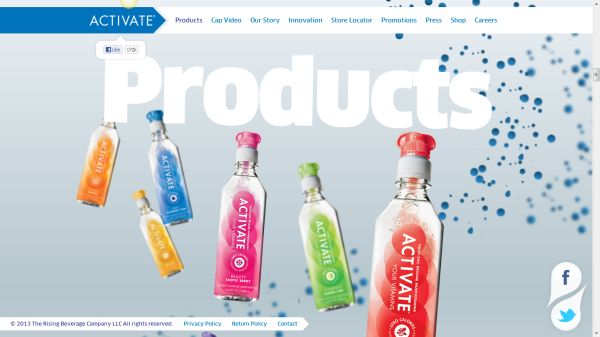
In web design parallax scrolling refers to the effect of having different layers move at different speeds in relation to the viewer, like the way the different layers move in Github’s creative 404 landing page when you mouse over them. Parallax scrolling first gained traction in the design community after Nike featured the scheme in its recent Better World site redesign, and since then thousands of websites have sprung up in the same vein. The question remains however, will parallax just be the lens flare of web2.5, or will the effect demonstrate the lasting power to become a web-design staple.
The aesthetic gains of parallax scrolling are obvious, the designs are eye-catching and attention grabbing and can lead to a significant increase in the time users spent on a website. In addition, parallax scrolling adds an interactive dimension simply unmatched by standard web designs, an especially attractive attribute for companies that need to showcase a product in a memorable way, like Nike did in their Air Jordan 2012 site.
Additionally, parallax scrolling gives developers more control over user’s vision paths making it easy to highlight certain information or draw a visitor’s attention to a specific area on the page. The design also creates a funnel effect whereby users are lead directly to your most vital call to action buttons simply by following the narrative.
Making a website that features parallax scrolling isn’t all roses, however. The effect is simply a hassle to create; you could code it (with much difficulty) using JavaScript/jQuery but it may load slowly or scroll choppily – both virtual death sentences for websites. Or you could code it in CSS3 but you’d still need to rely on JavaScript to handle the varying scroll speeds, and even more important, CSS3 isn’t yet supported on all major browsers and mobile devices. Furthermore, since parallax design displays content as one page your site is essentially limited to one title tag and one meta description which can lead to serious a SEO dropoff.
activate drinks parallax
So will parallax scrolling become a design staple? The answer is we still don’t know. In the meantime though, parallax scrolling has its place in web design, namely for artsy pages trying to outshine their competition and e-commerce sites large enough to overcome any SEO difficulties the tech proposes.
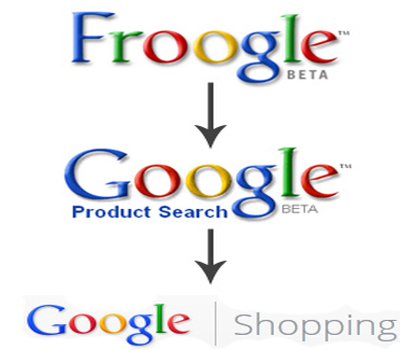
Google Shopping, introduced in late May and designed to supplant Google Product Search, is provoking anxiety, confusion and, here and there, enthusiasm among retailers large and small. No one likes it when free becomes paid, but Google Shopping also represents another step for Google in combining search and commerce—essentially, to function not only as a search engine, but as a sales engine.
According to Mike Effle, CEO of Vendio Services Inc., an e-commerce services provider, 80% of merchants in the Internet Retailer Top 500 Guide have provided free product listings to Google’s comparison shopping service. He went on to say, “these merchants were drawn by an online shopping audience that ranks behind only eBay and Amazon in visits.”
What Will Google Shopping Look Like?
The new format may mean consumers see fewer AdWords ads at the top of the search results page, followed immediately by paid Google Shopping listings—product images with their prices and links to retailers below the pictures—which are labeled “sponsored.” Those listings can include additional product information. Immediately below the row of images will be links that enable shoppers to browse by product type; retailers presumably would adjust bids for those products based on seasonality and other factors, including to highlight best sellers, and to maximize margins. Natural search results appear below the Google Shopping module.
The new Google Shopping listings won’t cost consumers anything to view. The starting point will be the same as with the expiring Google Product Search: Merchants will upload such product data as price, image and description to Google’s Merchant Center. But then they’ll have to bid for their listings to appear when consumers search on product-related terms, just as they bid on paid search ads through Google AdWords.
How Will Google Shopping Work?
Product Listing Ads now become the vehicle through which retailers advertise on the Google Shopping service. Merchants bid on the amount they will pay if their product listings in Google Shopping attract clicks or result in sales—that is, on a cost-per-click or cost-per-acquisition model. “Ranking in Google Shopping will be based on a combination of relevance and bid price,” says Sameer Samat, vice president of product management, Google Shopping.
In promoting the paid comparison shopping service, Google representatives talk often about retailers having more control over their listings because merchants will be able to bid based on product attributes or sales, attracting consumers more likely to buy than in the past. After placing those bids, retailers then should let the ads run for one or two weeks, and measure the returns. Then comes more refinement, and the lather-rinse-repeat cycle of figuring out what works best as the ads become ever more precise. “The merchant can then optimize from there at a more granular level, for example breaking up ‘shoes’ into different subcategories or bidding higher on specific brands of electronics in their inventory,” Samat says.
Google Shopping: The Numbers
The paid comparison shopping model could boost Google’s revenue by at least $250M annually, says Scot Wingo, CEO of e-commerce services provider ChannelAdvisor Corp. That’s hardly pocket change, though it pales next to Google’s second quarter 2012 revenue of $10.96B, which was propelled by a 42% year-over-year increase in the number of clicks on ads that appear on Google search results pages, the company’s prime source of revenue.
Google mainly seems to want to make its search engine a more attractive place to start a shopping trip, and to stem the flow of consumers beginning their research on Amazon.com. There’s ample evidence that Google has been losing ground to Amazon among web shoppers. A Vendio study of online marketing channels found:
Clicks from Google Product Search to merchants monitored by Vendio declined 21% in July compared with a year earlier.
In July 2012, Google Product Search accounted for 18% of clicks and 28% of orders among comparison shopping engines.
Amazon Product Ads were the only major channel to register gains, increasing clicks by 1.25% between April and June. During that same period, clicks declined 9.65% for Google.
Forrester Research Inc. data show:
30% of U.S. web shoppers began their product research on Amazon.com in the third quarter of 2011, up from 18% in the third quarter of 2009.
13% began their product research at Google, down from 24% in the same period in 2009.
Google is providing little detail on how much Google Shopping marketing might cost. “Costs vary widely, not only by size but by the retailer’s vertical, inventory, number of products carried, and bids,” says Samat. “Our focus is on making sure the ROI from Google Shopping at any level is high for the retailer.” A March estimate from ChannelAdvisor provides a view of the price differences between Google ad products and their effectiveness:
The average cost per click for AdWords for its clients was 67¢, compared with 50¢ for a Product Listing Ad, a format with richer product information such as images and prices.
The average conversion rate for AdWords stood at 1.49%, compared with 2.40% for the Product Listing Ads that Google has displayed for the past three years and 2.60% for the free Product Search listings.
Average order values stood at $112.24 for AdWords, $105 for Product Listing Ads, and $105 for Product Search.
“It’s important to note that we do expect the [Product Listing Ad] program to change dramatically with the sun setting on [Google Product Search] as the number of competitors in the auction will increase dramatically,” Wingo says.
A Changing Environment
Google executives argue that requiring retailers to pay for the Product Listing Ads on Google’s comparison shopping service will encourage them to make sure their product data, prices and sales are current and accurate—which, in turn, will help Google deliver better results to consumers. “As an advertising system we need to be much smarter, and do a better job for retailers [by] sending more qualified clicks to them,” Samat says. “Google Shopping will empower businesses of all sizes to compete effectively, and it will help shoppers turn their intentions into actions lightning-fast.”
Google also is encouraging merchants to take part in a host of other e-commerce services, like Google Analytics and Google Trusted Stores, that will help solidify Google’s position as a sales-generating and sales-support tool. Its free Trusted Stores program, for example, allows participating merchants to display a badge on their e-commerce site that shows consumers such customer service data as average on-time shipping rates, along with a guarantee to address any issues that arise by working with the e-retailer on the customer’s behalf. Google monitors merchants for at least 28 days to vet performance standards, after which a merchant may display a Trusted Store badge.
If Google’s vision succeeds and more online shoppers rely on the service, those merchants not taking part will have to find ways to compete with Google’s souped-up sales engine. “Online retailers that lack the expertise or pocketbook to use Google Shopping profitably will need to double their efforts to improve their businesses through SEO, social marketing, and the more defined, fee-driven marketplaces with predictable margins,” says Effle. “Weaker merchants may not survive this transition, but those who do will gain market share.”
How to succeed with Google Shopping
Treat it as comparison shopping, not search marketing: Google Shopping enables consumers to shop via price, brand, size and other attributes; that’s different from AdWords paid search ads focused on keywords.
Start broadly: craft bids for Product Listing Ads at the category level, see what works, then tailor bids to specific products or attributes.
Decide on CPC vs. CPA: Google says that cost-per-click bidding would work best for retailers focused on traffic, while cost-per-acquisition would serve merchants more interested in sales.
Place minimum bids on all inventory: Google says that placing even very low bids on products submitted via its Merchant Center ensures that interested shoppers have access to those items.
Follow the paid search rule: for every dollar you spend, get $5 in sales.
Google Shopping versus AdWords
Purpose: Google Shopping enables consumers to comparison shop. AdWords shows paid search ads to online consumers.
Focus: Google Shopping is all about products; AdWords revolves around keywords. Advertisers need not provide keywords for Product Listing Ads on Google Shopping, as Google determines relevant keywords from product feeds.
Complexity: Managing Google Shopping, with Product Listing Ad bids centered around product features, promises to be more complex than crafting an AdWords campaign.
Format: Google describes Product Listing Ads as “AdWords ads that include rich product information, such as product image, price and merchant name.”
Certain events—the approach of Halley’s Comet, a perfect storm—are so rare that the average person would be privileged to witness them once in a lifetime. Here at Hara Partners, we’re no different. We come to the office, we draw up proposals, we tinker with website design, but we don’t typically experience earth-shattering natural phenomena.
Until now.
Take a few seconds to digest the sartorial miracle. Have a cigar while you’re at it—this sort of thing is to be savored, never rushed. Note the lovely gradations between each torso, delicately enhanced by the play of light and shadow. Cerulean, azure, cornflower, sky, baby: a legendary assortment of blues confronts the eye, which reels from the exquisite cornucopia.
Like the planets aligning, these seven paragons of Hara Partners strode into the office on the morning of October 24th, 2012, exactly as commemorated here. King Arthur himself couldn’t have made a grander or more fortuitous entrance. All activity ceased; a steady radiance shone forth from the assembly; an angels’ choir serenaded the stunned onlookers.
Oh, come on, you may find yourself thinking, so they coordinated outfits. Ha, ha.
NAY! Lies and devilry! Nothing less than scientific impossibility refutes this plebeian conjecture. Each of them possesses no less than 400 shirts, tunics, waistcoats, and/or jerkins. They are forbidden from discussing apparel during or between work. In fact, each has signed a sworn affidavit that they left home that morning wearing black or green.
It may be centuries—eons!—before fate bestows such a lucky confluence on our species again. We can only gather in wonder, humbled before a portrait that surely marks the dawn of a Golden Age. Just one question remains: was the cameraperson also wearing blue shirts? Or, by some providential happenstance, did the sheer charisma of the scene telekinetically impel the camera to act of its own accord?
As we start the new year, many in the worlds of media and advertising are digging out from holiday-spending reports, and reflecting on what those shopping patterns tell us about consumer behavior and the American mindset. It’s a good time to look back and look forward. In that spirit, let’s look at the data we’ve collected about Affluent’s shopping patterns throughout the year, and distill it into three key takeaways to help marketers prepare for 2012 and beyond.
1. Value remains a top priority. Value has been one of the predominant marketplace themes for more than four years, growing in importance since the earliest days of the Great Recession. Our annual Ipsos Mendelsohn Affluent Survey — a nationally representative study of more than 14,000 adults living in households with at least $100,000 in annual household income — has explored the value-orientation that continues to be prevalent, even among financially successful Americans. When our 2011 annual survey was underway in Q1 and Q2…
78% of affluents agreed, “When it comes to quality, I believe you get what you pay for.”
60% of affluents agreed, “Even though the recession is ‘officially’ over, I am still spending money much more cautiously than I used to.”
Only 18% of affluents agreed, “I tend to buy based on price, not quality.”
Our September and October 2011 Ipsos Mendelsohn Affluent Barometer surveys found that value remains a prevalent theme today, even when consumers consider luxury purchases — for example, 89% agree, “When I decide to purchase a luxury item, I go out of my way to find the best price possible.” Conversely, only 22% of affluents agree, “If a luxury product goes on sale, it lessens the perception of luxury.”
2. Online shopping remains tremendously strong. This holiday season may show some weakness in overall spending, but our surveys suggest that online shopping will have remained strong through the holiday season (a conclusion that appears to be consistent with sales figures from Cyber Monday). Indeed, online shopping has long ceased being a niche aspect of affluents’ marketplace lives, and has come to rival their in-store shopping, at least in terms of “share of lifestyle,” if not “share of dollars.” For example, our November 2011 Affluent Barometer reveals that, among affluents…
On average, they tell us that three out of their last 10 purchases were online
62% agree, “Online shopping sites usually provide a more convenient shopping experience than in-person retail stores.”
Affluents were evenly split in their agreement with this statement: “For most of the things I buy, I would rather shop online than shop in a retail store.” One-third agreed, one-third disagreed, and one-third were in the middle.
14% of affluents indicated they belong to Amazon Prime (25% of affluents aged 18-34). Two-thirds of Affluent Amazon Prime members agree, “My online shopping has increased significantly since I joined Amazon Prime.”
3. Affluents are strategic shoppers. Window shopping, browser, and “shopping as sport” attitudes may all be less prevalent than a few years ago. It’s certainly clear that much Affluent shopping is carefully thought through and evaluated. Specifically, among affluents…
64% agree, “I regularly read online reviews of products before making an online purchase.”
47% agree, “I regularly read online reviews of products before making a purchase in a retail store.”
68% agree, “When I go shopping online, I usually know exactly what I want to buy.”
63% agree, “When I go shopping in a retail store, I usually know exactly what I want to buy.”
ABOUT THE AUTHOR
Bob Shullman and Stephen Kraus are president and chief research and insights officer of Ipsos Mendelsohn, respectively. The Ipsos Mendelshon Affluent Study has looked at trends affecting this demographic for 35 years. The Affluency column appears monthly on AdAgeStat.
Many Magento stores lack the sales they need for reasons that seem unknown to them, they need Magento Optimization. A list was pulled together by QuBit to help companies understand what their websites are lacking, and how to correct them.




 Parallax scrolling first gained traction in the design community after Nike featured the scheme in its recent Better World site redesign, and since then thousands of websites have sprung up in the same vein. The question remains however, will parallax just be the lens flare of web2.5, or will the effect demonstrate the lasting power to become a web-design staple.